
Herbarium of Trenton guides
- Folder
- Recycle & Dispose
- Sheet
- No. 04 of 12
- Read
- 4 min
Collector’s notes
- All of Trenton’s waterways drain to the Delaware River or the Delaware and Raritan Canal, except a small area that drains toward Crosswicks Creek.
- Nearly 20% of Trenton lies within the 100- or 500-year floodplain, the City’s stormwater plan says.
- Only toilet paper belongs in the toilet, along with human waste, Trenton’s sewer utility says.
When rain falls on a Trenton street, it does not soak into the ground for long. Roofs, roads and parking lots shed it into gutters and storm drains, and from there it heads for the city’s rivers and creeks. Whatever the water picks up on the way goes with it. The City’s own stormwater plan explains why that matters here more than in most places.
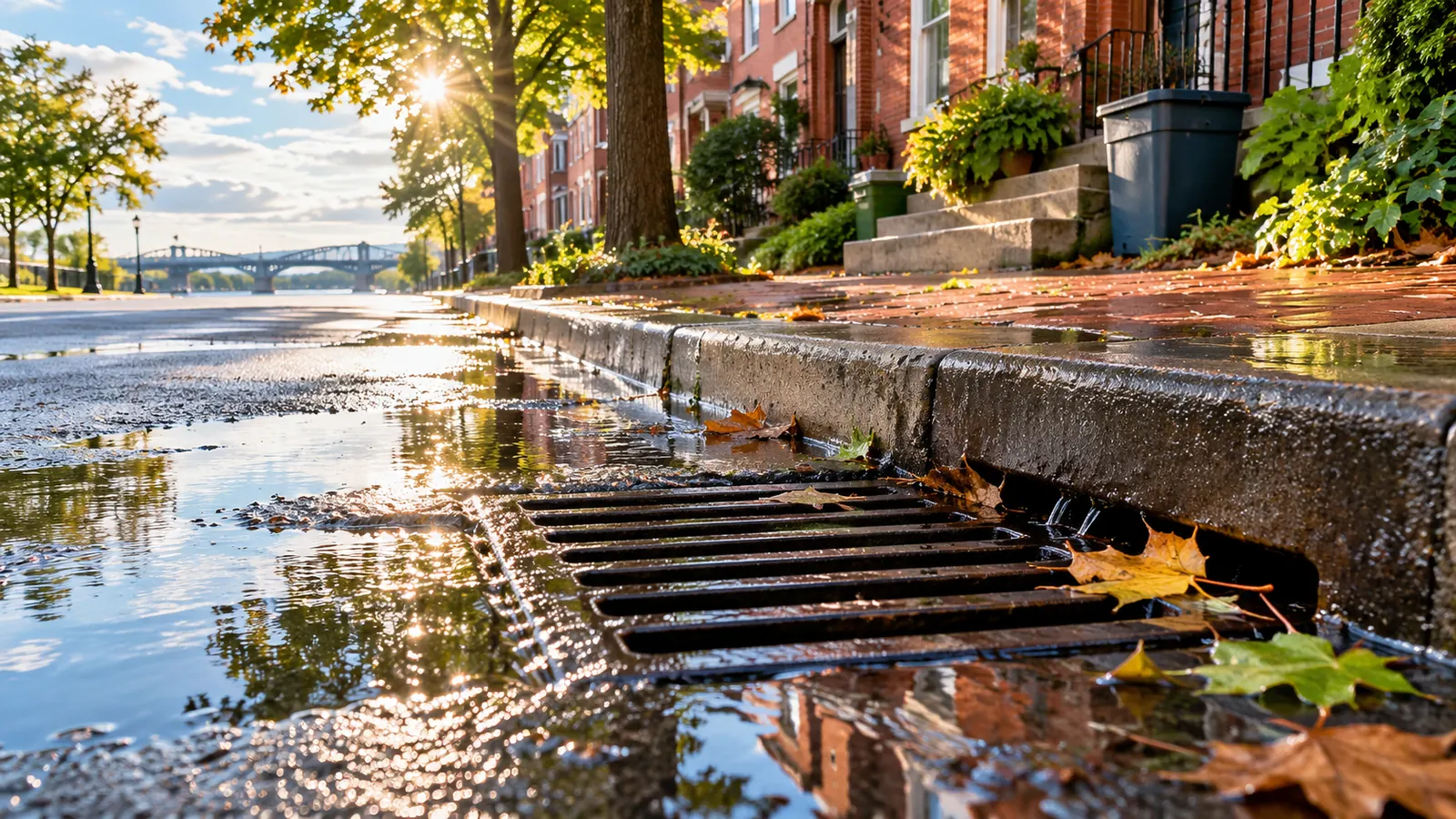
Where Trenton’s rain goes
According to the City of Trenton’s Stormwater Management Plan, all waterways in the city drain to the Delaware and Raritan Canal or the Delaware River, except an area in the southern and eastern part of the city that drains toward Crosswicks Creek. The largest creeks and streams in the city are Shabakunk Creek, Pond Run and Assunpink Creek. The plan describes the Delaware River as the most significant body of surface water, the canal, built in the 1830s to carry freight, as another major resource, and Assunpink Creek as the third.
The plan also notes that Assunpink Creek is channelized through much of Trenton and buried in a culvert beneath the interchange of Routes 1, 33 and 129. More on the creek is in Assunpink Creek and Flooding in Trenton: The Creek’s Record Peaks and How to Prepare.
A small city with a lot of pavement
Trenton covers about 8.23 square miles, the plan says, and its boundary runs to the middle of the Delaware River. With so much of that area built up, stormwater runs off quickly. The plan explains that as imperviousness increased in and around Trenton, stream peaks and volumes increased too, causing bank erosion, unstable areas at road crossings and degraded habitat. Less rain soaks in, so streams also run lower in dry summer weather.
Location makes it harder. Trenton sits where Assunpink Creek meets the Delaware River, and the plan describes how that combination reduces the ability of stormwater to leave the drainage basin, causing backwater effects and a stacking of floodwaters within city limits. Nearly 20 percent of Trenton is within the 100-year or 500-year floodplain.
Pollution that comes with the rain
The plan calls nonpoint source pollution, the diffuse runoff from land, the primary source of surface and groundwater contamination. Urban runoff, construction activity and illegal dumping can carry sediment, phosphorus, nitrogen, metals, pesticides, herbicides and salts into waterways, with harm to fish, water supply, wetlands and recreation. The plan reports that every subwatershed in Trenton was characterized by the state as not supporting at least one designated use.
The rules Trenton adopted
The City lists on its stormwater page a set of ordinances adopted from the New Jersey Department of Environmental Protection’s model ordinances. Together they cover the everyday habits that send pollution into storm drains:
- Illicit connections to the municipal storm sewer system
- Littering
- Pet waste
- Feeding of wildlife
- Privately owned refuse containers and dumpsters
- Yard waste
- Spilling, dumping or disposal of materials other than stormwater
- Privately owned salt storage
- Retrofitting of storm drain inlets
- Tree removal and replacement
In practice that means picking up after a dog, keeping dumpster lids closed, not sweeping leaves or grass clippings into the street and never pouring anything into a storm drain.
Tip: If you see someone dumping oil, paint or chemicals into a storm drain, note the location and time and report it to the City. Leftover chemicals have a proper outlet in Mercer County’s collection days, covered in Household Hazardous Waste in Mercer County: 2026 Drop-Off Days and What They Take.
The other drain: your toilet and sink
Sanitary sewers have their own problems. Trenton’s sewer utility says wipes, feminine hygiene products and other paper materials do not break down easily and can get stuck in the narrow sewer lateral that connects a home to the city system. Grease poured down a kitchen sink attaches to those wipes and forms what the utility calls fatbergs, leading to clogged pipes, sewage backups into homes and expensive repairs.
The utility uses pumps to move sewage through elevation changes, and anything other than toilet paper can catch on the screens that guard the pumps or get through and break them. Its bottom line: the only things that belong in the toilet are human waste and toilet paper.
- Wipes, including ones labeled flushable — Trash.
- Cooking grease and fats — Cool, put in a sealed container, trash.
- Leftover motor oil or paint thinner — County hazardous waste day.
- Grass clippings and leaves — Compost or yard waste collection, never the street.
- Pet waste — Bagged and in the trash.
What a household can do
Small changes add up across a city of more than 90,000 people. Sweep sidewalks instead of hosing debris into the gutter, keep storm drain grates in front of your home clear of leaves so they do not flood the street, and compost yard waste instead of leaving it at the curb in loose piles. Our Composting at Home in New Jersey: A Rutgers-Backed Method for Yards and Kitchen Scraps guide covers the composting part.