
Herbarium of Trenton guides
- Folder
- Healthy Home & Yard
- Sheet
- No. 12 of 12
- Read
- 4 min
Collector’s notes
- Rutgers’ slow method is ready in 12 to 18 months; the fast method in 5 to 15 weeks.
- A pile at least 3 by 3 feet holds heat; one larger than 5 by 5 feet may not get enough air.
- Keep meat, dairy, greasy foods and pet waste out of a backyard pile.
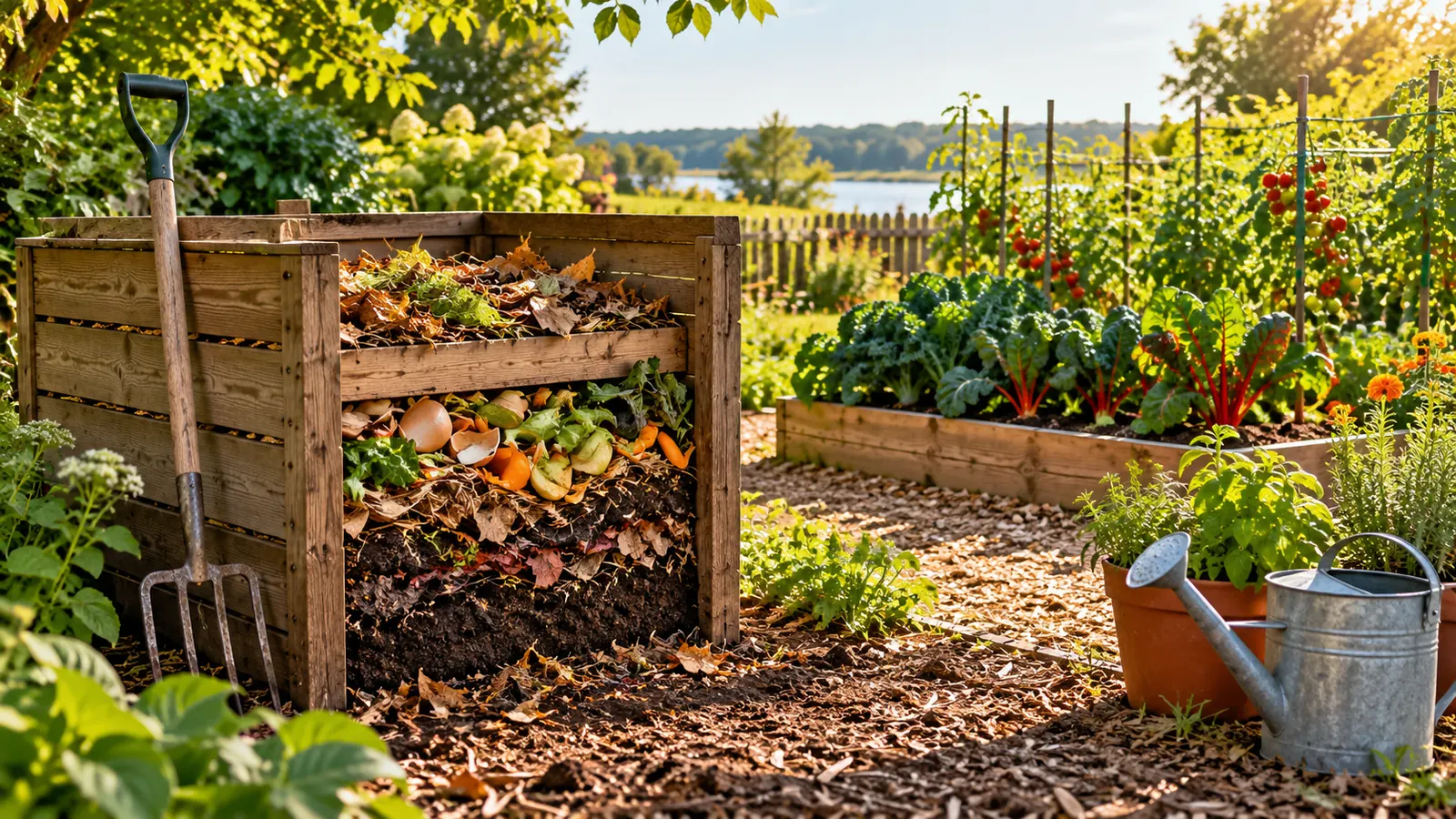
Leaves, grass clippings and vegetable peels make up a large share of what a household throws out, and all of them can become compost in a corner of the yard. Rutgers Cooperative Extension’s home composting fact sheet, written for New Jersey gardeners, lays out a simple method that works in a city backyard as well as on a larger lot.
Why compost
Rutgers describes compost as a dark, crumbly, earthy-smelling soil conditioner made when organic materials decompose. It improves soil structure, aeration and water holding, promotes fertility and healthy roots, helps control erosion and reduces the need for fertilizer and watering. It also cuts the volume of garbage going to landfills, transfer stations and incinerators, and saves time bagging grass and leaves.
It keeps yard waste out of the street, too. Trenton’s stormwater rules include a yard waste ordinance, and leaves and clippings left at the curb wash into storm drains; see Storm Drains and Stormwater in Trenton: Where Rain Goes and What Should Never Follow It.
What goes in, what stays out
| Compost | Leave out |
|---|---|
| Vegetable food scraps | Meat scraps and bones |
| Grass clippings | Dairy products |
| Leaves | Food with grease or soap residue |
| Flowers and weeds without seeds | Weeds with seeds |
| Coffee grounds with filters | Diseased or insect-infested plants |
| Sawdust and wood ash | Dog and cat feces |
| Chopped twigs and branches | Fats, oils and grease |
The list combines Rutgers’ fact sheet with the U.S. Environmental Protection Agency’s home composting page, which adds crushed eggshells, paper tea bags without staples, shredded uncolored paper and shredded cardboard without wax, tape or glue to the yes column, and pet waste and cat litter to the no column.
How a pile actually works
EPA describes composting as managed, aerobic decomposition: microorganisms feed on the materials in the pile, using carbon and nitrogen to grow and reproduce, water to digest materials and oxygen to breathe. That is why every recipe balances carbon-rich browns, such as leaves and twigs, with nitrogen-rich greens, such as grass and food scraps. EPA suggests keeping fruit and vegetable scraps in a closed container in the kitchen, under the sink or in the freezer, and setting aside a supply of leaves outside to mix in with each batch. Chopping tough scraps such as corn cobs and broccoli stalks helps them break down faster.
Two ways to do it
Slow: ready in 12 to 18 months
Add layers of yard waste as you produce them over several months. Material at the bottom and center breaks down first. This suits a busy household that mostly composts leaves and clippings.
Fast: ready in 5 to 15 weeks
Mix equal weights of green and brown materials at once, such as grass clippings or vegetable scraps with leaves, leaving out woody material. Turn the pile with a pitchfork or aerator twice a week for the fastest results, less often in winter.
The four things a pile needs
- Water: keep it as moist as a wrung-out sponge, and never let it dry out completely.
- Nutrients: about two parts nitrogen-rich greens, such as grass, to one part carbon-rich browns, such as leaves. Leaves alone will still compost, just slowly.
- Air: turn the pile; at minimum about once a month. Large branches at the bottom help air move in.
- Size and surface: chop branches a quarter inch or thicker. Build the pile at least 3 by 3 feet to hold heat, but no larger than 5 by 5 feet, or air will not reach the center.
If the pile smells bad, EPA says it is probably too wet or short on air. Add dry browns such as leaves and turn it.
Bins and small spaces
Rutgers notes that compost can be made in an open pile, but a simple homemade or store-bought bin keeps a city yard neat and holds the conditions needed for quick decomposition. For apartments or tiny yards, EPA describes worm composting, or vermicomposting, which takes little space and can be done indoors or out. A properly kept worm bin should not smell or attract pests. Worms eat most fruit and vegetable scraps, coffee grounds and filters and crushed eggshells, but EPA advises avoiding citrus, onions and garlic, meat, dairy, greasy foods and bones.
Knowing when it is done
EPA says a well-kept pile is usually finished in about three to five months, while an untended one may take a year. Finished compost is dark, loose and crumbly, smells like fresh soil, and the original materials are mostly unrecognizable.
Using it
Rutgers suggests three uses: spread compost as mulch around flowers, vegetables, trees and shrubs to smother weeds and keep roots moist; mix 1 to 3 inches into beds before planting; or make potting mix from equal parts screened compost and sand or soil.
Composting is one piece of a lower-waste household; the rest of the routine is in Trenton Recycling Guide: What Goes in the Bucket, When It Is Picked Up and What Stays Out. For help, Rutgers recommends calling your county Rutgers Cooperative Extension office or your county recycling office.