
Herbarium of Trenton guides
- Folder
- Healthy Home & Yard
- Sheet
- No. 10 of 12
- Read
- 4 min
Collector’s notes
- All children should be tested for lead at 12 and 24 months of age, the City of Trenton says.
- Pre-1978 rental units in New Jersey need periodic lead-based paint inspections.
- A lead-safe certification is valid for two years.
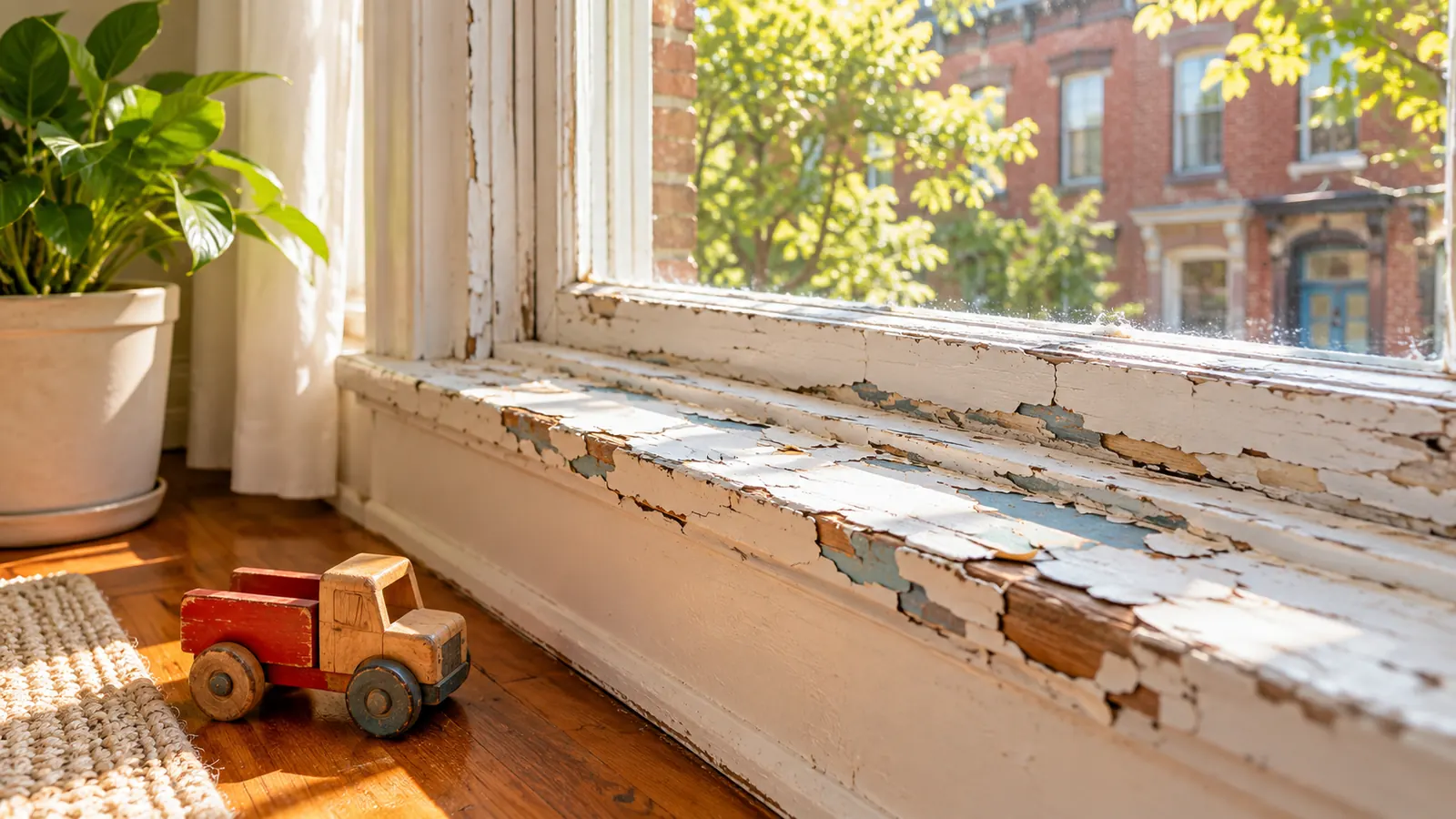
Lead paint was outlawed in 1978, but many older homes still contain it, Trenton Water Works reminds residents. In a city with as much older housing as Trenton, peeling paint and the dust it leaves on floors and windowsills are a common source of lead for young children.
How children are exposed
Children are exposed to lead by swallowing or inhaling it, the City’s health pages explain. The sources the City lists include:
- Homes built before 1978, especially with cracked or peeling paint that leaves chips and dust
- Consumer products such as toys with batteries, jewelry, spices and dinnerware
- Cultural products made outside the U.S., such as home remedies, charms and ceremonial powders
- Jobs such as construction, landscaping, roofing, painting and auto-body repair, where lead can be tracked home
- Living near heavily traveled roads or where old houses are being demolished
The City notes that the effects are more harmful to children under six because their bodies are developing quickly, and because young children put their hands and objects in their mouths. Most children have no obvious symptoms. A blood test is the best way to know.
When to test
The City of Trenton says all children should be tested at both 12 and 24 months of age, and that older children, 6 to 17, should be tested if they have a known or suspected lead source. Testing is done with a finger-prick or a blood draw from a vein, at a doctor’s office or a lab, and federally qualified health centers can provide or arrange it. Many private insurance policies cover lead testing, and for children on Medicaid the cost is covered.
Your child’s provider may test more often if the child lives in or visits a pre-1978 home with peeling paint or renovations, lives with an adult whose job or hobby involves lead, or had an elevated result before.
If a test comes back high
The City’s Childhood Lead Poisoning Prevention Program provides case management for children with elevated venous blood lead levels of 5 micrograms per deciliter or above. A nurse case manager visits the home, and depending on the level a lead inspector risk assessor joins the visit. The program educates families, helps test siblings and pregnant women in the household, looks for sources of exposure and, through the Bureau of Environmental Health, follows identified lead hazards through an abatement protocol until they are fixed.
The rental inspection rule
New Jersey’s lead-safe certification law, P.L. 2021, c. 182, and the Department of Community Affairs rules that implement it, N.J.A.C. 5:28A, require periodic inspections of rental housing built before 1978. The rules apply to rental single-family, two-family and multiple dwelling units.
| Question | What the rule says |
|---|---|
| Which units? | Rental units built before 1978, with exemptions |
| First inspection | At tenant turnover or within two years of July 22, 2022, whichever came first |
| After that | Every three years or at tenant turnover, whichever is earlier |
| Certificate | Lead-safe certification, valid two years |
| Who inspects | The municipality, or a certified lead evaluation contractor the owner hires |
| Extra fee | $20 per unit for the state’s Lead Hazard Control Assistance Fund |
Exempt units include those built in 1978 or later, short seasonal rentals of single- and two-family homes, units certified lead-free, units with a valid lead-safe certification, and some long-registered multiple dwellings with no outstanding paint violations.
How the inspection is done depends on local data. In towns where fewer than 3 percent of tested children six or younger have a blood lead level of 5 micrograms per deciliter or more, a visual assessment for deteriorated paint and dust may be used. Where at least 3 percent do, inspectors must take dust wipe samples from floors, windowsills and similar surfaces.
Lead-safe is not lead-free
The rules draw a careful distinction. A lead-safe certification confirms that an inspection found no lead-based paint hazards at that time; it does not mean the dwelling is free of lead paint. A lead-free certification, issued under a separate rule, states that there is no lead-based paint or that the dwelling has undergone lead abatement, a set of measures designed to permanently eliminate lead-based paint hazards. For tenants, a lead-safe certificate is reassuring, but intact old paint can still become a hazard if it starts to peel or is disturbed by repairs.
Everyday steps at home
The City’s prevention advice is practical:
- Wash children’s hands before eating, after playing outside or on the floor and before sleeping.
- Wash toys, bottles and pacifiers often.
- Clean floors and windowsills with a damp mop or sponge and detergent.
- Feed children foods high in iron and calcium.
- Know whether your home has lead-based paint before renovating, and use lead-safe practices or a certified renovator in pre-1978 homes.
- Use only cold tap water for formula, drinking and cooking.
Lead in water is the second half of the picture; see Lead in Trenton’s Drinking Water: Service Lines, the Free Replacement Program and Safer Tap Habits. After a flood, damaged painted surfaces need the same care, as noted in Assunpink Creek and Flooding in Trenton: The Creek’s Record Peaks and How to Prepare.