
Herbarium of Trenton guides
- Folder
- Healthy Home & Yard
- Sheet
- No. 11 of 12
- Read
- 4 min
Collector’s notes
- Radon is the leading cause of lung cancer among non-smokers, according to EPA estimates.
- EPA recommends fixing a home at 4 pCi/L or more and considering it between 2 and 4.
- Place a test kit in the lowest lived-in level, at least 20 inches above the floor.
Radon has no smell, no color and no taste, and the only way to know how much is in your home is to test. The U.S. Environmental Protection Agency says any home may have a radon problem: new and old, well-sealed and drafty, with or without a basement. Testing is cheap and takes a few days.
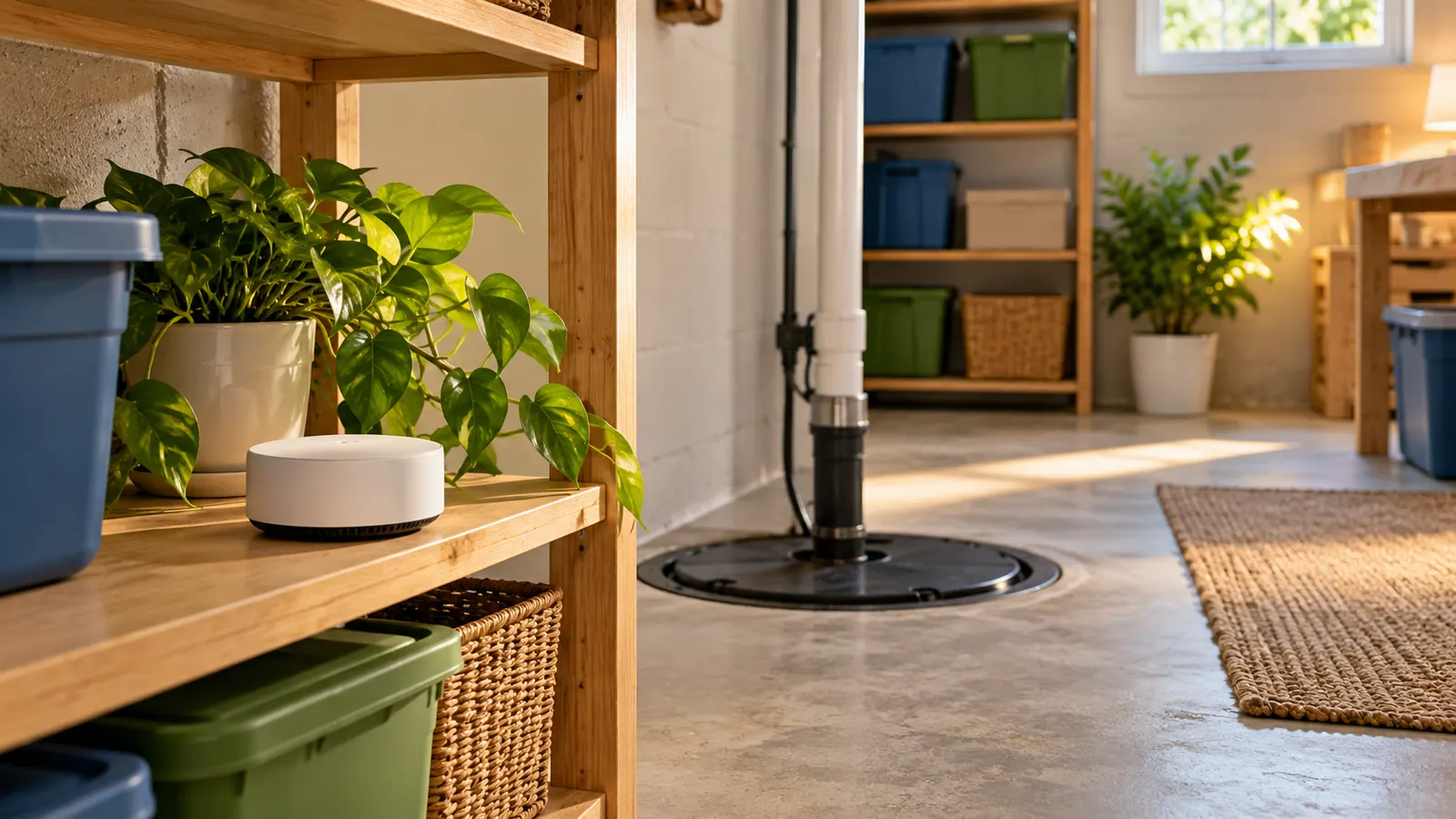
What radon is and how it gets in
Radon is a radioactive gas that comes from the natural decay of uranium found in nearly all soils, EPA’s Citizen’s Guide to Radon explains. It moves up through the ground and into homes through cracks and other openings in the foundation, and the house traps it inside. EPA lists the usual entry points:
- Cracks in solid floors
- Construction joints
- Cracks in walls
- Gaps in suspended floors
- Gaps around service pipes
- Cavities inside walls
- The water supply
Soil gas is the main cause of radon problems; well water and building materials are less common sources. EPA estimates that nearly 1 in 15 U.S. homes has elevated radon levels.
Why it matters
According to EPA estimates, radon is the leading cause of lung cancer among non-smokers and the second leading cause overall. The agency attributes about 21,000 lung cancer deaths a year to radon, about 2,900 of them among people who have never smoked. For smokers the risk is far higher, because radon and smoking act together.
Key takeaways
- Test every home, whatever a map says about your area.
- Fix at 4 pCi/L or more; consider fixing between 2 and 4.
- Confirm a high short-term result before you fix.
Maps are not a substitute for a test
EPA’s Map of Radon Zones, developed in 1993, was designed to help governments target resources and adopt radon-resistant building codes. EPA states plainly that it should not be used to decide whether an individual home needs testing. No matter where you live in Mercer County, the advice is the same: test.
Choosing a test
Short-term tests stay in the home for two days to 90 days, depending on the device, and are the quickest way to test. Because radon varies from day to day and season to season, a short-term test is less likely to show the year-round average. Long-term tests stay in place for more than 90 days and give a better picture of the average. Kits are sold online and in home improvement stores; EPA also points to discounted kits from the National Radon Program Services at Kansas State University and to state radon programs for kits and lists of credentialed professionals.
Running the test correctly
Small mistakes can spoil a result. EPA’s instructions:
- Place the kit in the lowest lived-in level: the basement if it is used often, otherwise the first floor.
- Use a room people spend time in, such as a living room, den or bedroom, but not a kitchen or bathroom.
- Set it at least 20 inches above the floor, away from drafts, high heat, high humidity and exterior walls.
- For a 2- or 3-day test, close windows and outside doors at least 12 hours before starting and keep them closed.
- Do not run fans that bring in outside air, and avoid testing during severe storms or high winds.
- When finished, reseal the kit and mail it to the lab right away.
EPA’s three steps
| Step | What to do |
|---|---|
| 1 | Take a short-term test. If the result is 4 pCi/L or higher, follow up. |
| 2 | Follow up with a long-term test, or a second short-term test if you need results quickly. If the first result was more than 8 pCi/L, take a second short-term test right away. |
| 3 | Fix the home if the long-term result is 4 pCi/L or more, or consider fixing if the average of two short-term tests is 4 pCi/L or more. |
Reading your number
For context, EPA estimates the average indoor radon level at about 1.3 pCi/L and outdoor air at about 0.4 pCi/L. The agency recommends fixing a home at 4 pCi/L or higher and considering a fix between 2 and 4, and notes that any radon exposure carries some risk. Even below 4 pCi/L, EPA says you may want to test again sometime in the future, and if you start living on a lower level, such as a basement, you should retest on that level.
Tip: Buying a newer home? EPA says new homes can be built with radon-resistant features, but every new home should still be tested after people move in.
Fixing a high level
EPA says radon reduction systems work and are not too costly. Hire a qualified mitigation professional; your state radon program or a private proficiency program can provide lists. Radon is one of three invisible home hazards worth checking in older Trenton-area houses, with lead in water and paint covered in Lead in Trenton’s Drinking Water: Service Lines, the Free Replacement Program and Safer Tap Habits and Lead Paint and Children in New Jersey: Testing, Trenton’s Lead Program and the Rental Inspection Rule.